
“The dialogue was powerful, urgent, and essential—bringing local history vividly to life.” Jim Dorman
As we observe our nation’s 250th anniversary, you might ponder where you would have stood as a colonist in 1776. If so, Revolutionary Voices: Independency—presented by the Plymouth Antiquarian Society in the historic 1820 Courthouse at Plymouth Town Hall—is an enlightening and thought-provoking presentation.
Written by Plymouth Antiquarian Executive Director Patrick T.J. Browne, Revolutionary Voices is based on the deliberations of Plymouth’s Committee of Correspondence and Safety. According to the author’s note, the plot and dialogue are grounded directly in town records, personal correspondence, and period documents.
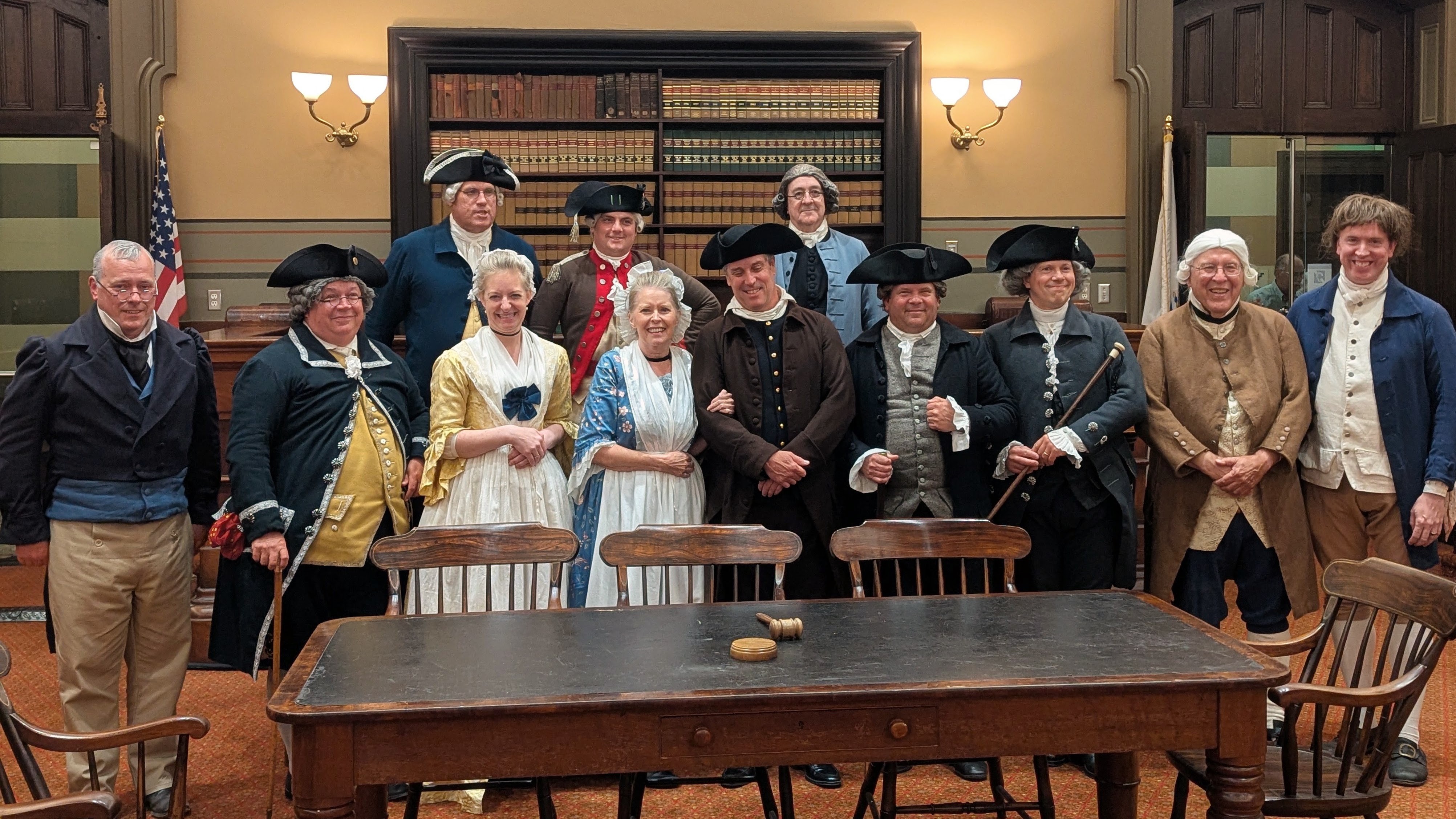
The 12-member cast includes Browne as Dr. James Thacher, a Plymouth physician and historian whose published military journal remains one of the most important local accounts of the Revolutionary War. Serving as narrator, Thacher opens and closes both acts of this two-hour performance, reflecting on the era 44 years later, in 1820.
Yes, it is a staged reading—the actors read primarily from portfolios. However, dressed in authentic period costumes, they bring every persona to life, from merchants and militia men to writers, deacons, and wives. They remain thoroughly in character throughout.
The narrative sets its conflicts in motion early. A heated discussion between Hannah Winslow (Joyce Poremski), wife of suspected Loyalist Edward Winslow Esq., and Mercy Otis Warren (Michele Gabrielson), a champion for freedom and wife of leading Massachusetts Patriot General James Warren (Michael Welch), effectively establishes the political tensions brewing in Plymouth.
In the second act, a poignant conversation between the Warrens highlights the gravity of the decisions yet to come. Gabrielson and Welch deliver the most dramatic moments of the evening; both actors connect effortlessly with the audience without relying heavily on their scripts.
Later, Bill Carter as suspected Loyalist Ichabod Shaw and Tom Dietzel as his interrogator, Captain Thomas Mayhew, prove compelling in the pivotal courtroom scene. The supporting cast adds further depth to the discussion, including a revealing look at the threat of smallpox—a disease that ultimately claimed the lives of several colonists, including a few key figures in the story.
Tension builds steadily toward a climactic resolution. Will the suspected Loyalists be turned over to the state for prosecution? The outcome remains uncertain until the findings are read. Ultimately, the play offers a balanced, fair judgment without favoring either side, while clearly conveying the immense stakes involved: Would you be brave enough to risk derision, imprisonment, or death? What are you willing to sacrifice? Is violence the only answer, and when it comes to taxation without representation, when is enough truly enough?
Though the performance moved quickly for a two-hour show, the venue presented some physical challenges: the courthouse benches were uncomfortable, and sightlines were poor enough that seated actors were invisible unless you sat near the front. Nevertheless, the dialogue was powerful and essential. For anyone willing to listen and reflect, the production was well worth the discomfort. Everyone was ready to stand and applaud this performance at its conclusion.
Both performances were at the Plymouth Town Hall on Saturday, July 25, 2026
“The dialogue was powerful, urgent, and essential—bringing local history vividly to life.”
Jim Dorman
Leave a Reply